New Orleans has been a city of artists, collectors, and creatives for more than two centuries. Whether you are visiting for a weekend you have lived here your whole life, buying original art in New Orleans feels different than anywhere else. At Elliott Gallery on Royal Street in the French Quarter, we work with first-time buyers and seasoned collectors every day. We have seen how the right guidance can turn an overwhelming experience into one of the most rewarding purchases of your life. Here’s what we’ve found about how to buy art in New Orleans.
Quick Tips for Buying Art in New Orleans
Whether this is your first purchase or your fiftieth, these practical reminders will help you move through the French Quarter gallery scene with confidence.
- Start on Royal Street if you want the highest concentration of established galleries with vetted inventory and experienced staff.
- Ask about the artist, their background, artistic impact, and if they were alive when the artwork was created
- Ask if it’s is original versus limited edition or digital reproduction before you fall in love with a piece. The distinction matters for value, rarity, and long-term enjoyment, and you always want to know what you’re buying.
- Request pricing early. It is completely normal and expected. Galleries are businesses, and no one will think less of you for asking.
- Look for documentation including an invoice, certificate of authenticity (COA), and provenance when available.
- Ask about condition, framing, and any past restoration so you know exactly what you are taking home.
- Confirm shipping and insurance before you commit to a purchase, especially if you are traveling from out of town.
- Ask before you photograph. Most galleries are happy to let you take photos, but it is good etiquette to check first.
- If you are unsure, request a hold or a private viewing. A reputable gallery will accommodate this.
- Buy what you love, then learn why it matters. Emotional connection is the foundation of any great collection.
- Work with a gallery that will support you after the sale: answering questions, assisting with installation, and helping your collection grow. That is what we do at Elliott Gallery.
Why New Orleans Is a Great Place to Buy Original Art
New Orleans has always attracted artists drawn to its light, its contradictions, and its refusal to be ordinary. From the Impressionist-influenced Louisiana painters of the early twentieth century to the vibrant contemporary scene that thrives here today, this city has produced and collected art of unusual quality.
The French Quarter art scene sits at the center of that tradition. Royal Street in particular has been synonymous with fine art, antiques, and craftsmanship for generations. The galleries here are not pop-ups or tourist shops, they are established institutions with professional expertise, authentic inventory, and real accountability to the collectors they serve.
It is also worth understanding what “original art” actually means before you shop. An original work is a one-of-a-kind piece created directly by the artist such as a painting, a sculpture, or a unique work on paper. A limited-edition print is a reproduction made in a controlled quantity, often signed and numbered by the artist. An open edition print is an unlimited reproduction with no rarity value. All three can be beautiful and worth owning, but they are not interchangeable, and their prices reflect that.
If you want to build a real collection or make a meaningful purchase, knowing the difference before you walk into a gallery will serve you well. Our guide on how to start an art collection goes deeper on these distinctions.
Where To Buy Art in New Orleans
If we are new to buying art in New Orleans, it helps to start with places that make the process easy. That means clear pricing, trustworthy documentation, and staff who can answer questions without rushing us. From there, we can branch out to markets, pop-ups, and online shopping once we know what we like and what to look for.
French Quarter art galleries
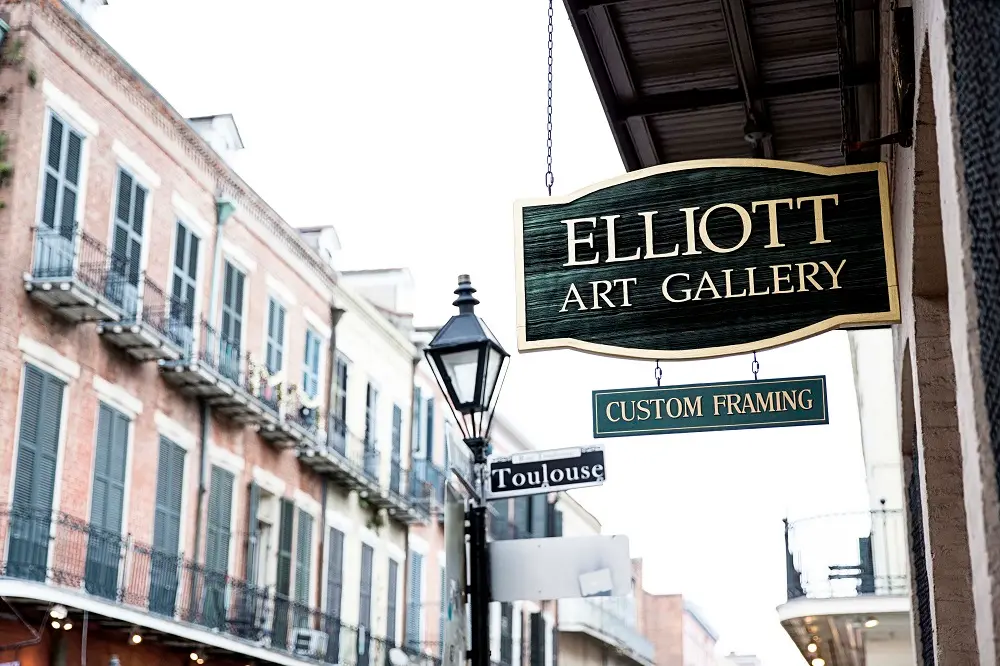
Royal Street is the best place to start your New Orleans art tour. The galleries here tend to carry established artists, offer professional documentation, and have staff who can speak knowledgeably about the work. You will find everything from nineteenth-century Louisiana landscapes to contemporary abstractions and sculpture.
Elliott Gallery at 539 Royal Street represents a curated selection of regional and national artists across multiple media. Our team is always glad to walk you through our collection without pressure.
If you would like help planning your visit or want to schedule a private viewing while you are in town, contact us before your trip and we will be happy to create a custom experience for you.
Art markets and pop-ups
The city hosts open-air markets and periodic pop-up events where you can find emerging artists and affordable works. These are great for discovering new voices, though documentation and post-sale support are less consistent than in an established gallery. Go in with open eyes and enjoy the energy.
Buying online from a New Orleans gallery
Many established French Quarter galleries, including Elliott Gallery, make works available online with full documentation and shipping options. Buying online from a reputable gallery gives you access to the same inventory and expertise as an in-person visit, and our team is always reachable by phone or email if you have questions before committing.
How Much Does Art Cost in New Orleans?
Pricing is usually the first question people feel nervous to ask, but it should be one of the first things you ask. In New Orleans, you will find everything from approachable works you can take home today to major investment pieces, and the difference usually comes down to medium, artist history, and rarity.
Price ranges by medium
Before we talk about what drives value, it helps to get a realistic sense of typical price ranges by category. Prices vary significantly depending on the artist, the medium, and the work’s history. As a general guide:
- Works on paper and drawings often start in the hundreds and can reach well into the thousands for established artists
- Paintings range from a few hundred dollars for emerging artists to six figures for significant historical works
- Sculpture occupies a wide range depending on materials and scale
- Limited edition prints by recognized artists typically fall between a few hundred and a few thousand dollars
What drives price
The four main factors in art pricing are the artist’s reputation and exhibition history, the size and medium of the work, its rarity (original versus limited edition or digital reproduction), and its provenance, or the documented ownership history that establishes authenticity and significance. A piece with strong provenance by an artist with a national exhibition record will command a higher price than a comparably sized work by an unknown artist, even if both are beautiful.
How to ask about pricing
Ask directly and early. A simple “Can you tell me the price on this piece?” is all it takes. Gallery professionals hear this question dozens of times a day, and they expect it. You are not being rude, you are being practical. If a price surprises you, it is also fine to say so and ask what drives it. Understanding the value story often changes how a price feels.
Price is only part of the decision. The bigger goal is buying something you love with the confidence that it is authentic, in good condition, and supported by the right paperwork, shipping, and care guidance.
How to Buy Art with Confidence
Price is only part of the decision. The bigger goal is buying something you love with the confidence that it is authentic, in good condition, and supported by the right paperwork, shipping, and care guidance.
Know what you’re buying
Before you fall in love with a piece, ask a simple question: is this an original work, a limited edition, or a reproduction? The distinction matters more than many buyers realize.
Giclée prints, for example, are high-quality digital reproductions of original paintings and can be remarkably convincing in person. They are not inherently less meaningful — many artists release them intentionally — but they carry a very different value than a one-of-a-kind original. A reputable gallery will always be upfront about the medium and process.
Authenticity basics and what paperwork to expect
When you buy original art from a reputable gallery, you should receive an invoice that describes the work in detail, a certificate of authenticity (COA) signed by the gallery or the artist, and provenance documentation when available. These documents protect your investment and will matter if you ever choose to resell, donate, or insure the work.
Condition, framing, and care
Ask about the condition of any work before you buy. Reputable galleries are transparent about any past restoration, damage, or repairs. Framing matters too. Ask whether the materials are archival, especially for works on paper. Once you own the work, most galleries are happy to provide basic care guidance: keeping it out of direct sunlight, away from humidity, and properly hung.
Shipping and delivery
If you are not taking the work home in person, ask about packaging methods (crated versus flat-shipped), shipping timeline, and insurance coverage. Established galleries handle art shipments regularly and will ensure the work arrives safely. Always confirm that insurance covers the full purchase value during transit.
Art Buying Etiquette in a French Quarter Gallery
Once you know how to ask about authenticity, condition, and shipping, the in-gallery experience becomes much easier. A few basic etiquette points can help you feel comfortable walking into any French Quarter gallery to buy art and having a productive conversation.
What is okay to ask, and what we should not do?
You can and should ask anything that helps you make a decision, including questions about price, condition, artist background, documentation, and shipping options. Nothing is off-limits. Do avoid making low-ball offers without genuine interest in the work.
Photos, handling work, and how to request additional images
Always ask before photographing individual works. Most galleries will say yes, and many will offer to send you professional images in natural light if you want to see the piece more carefully before buying. Do not touch paintings or sculpture unless explicitly invited to. If you want to examine a work closely, ask a staff member to assist you.
Is it okay to negotiate art prices, and how to do it respectfully
In established galleries, prices are generally set thoughtfully and reflect the artist’s market value. That said, it is reasonable to ask whether there is any flexibility, particularly on higher-priced works or when buying multiple pieces. Do it plainly and respectfully. Accept a no gracefully. Galleries have real obligations to the artists they represent, and pricing reflects that relationship.

Top 10 Questions to Ask Before You Buy Art
Before you commit to any purchase, run through this checklist. A reputable gallery will welcome every one of these questions.
- Is this an original, a limited edition, an open edition print, or a digital reproduction?
- Who is the artist, was this piece created during their lifetime, and what should I know about their style or period?
- What medium is it, and are there special care requirements?
- What is the size framed and unframed?
- Is the work signed, titled, dated, or numbered? (if applicable)
- What is the condition, and has anything been restored?
- Do you have documentation: invoice, certificate of authenticity, provenance if available?
- Can I see additional photos or a video in natural light?
- What are your shipping options, packaging method, and insurance coverage?
- What is your return, exchange, or hold policy?
Why Collectors Visit Elliott Gallery in New Orleans
Elliott Gallery has been an art destination on Royal Street for collectors at every stage, from first-time buyers who are not sure where to begin, to serious collectors expanding a decades-long art collection. Our staff brings deep knowledge of the artists we represent, and we take genuine pride in making the buying experience feel transparent, unhurried, and supported.
When you visit, you can browse the full gallery at your own pace or ask for a guided walkthrough of specific works. If you are considering a significant purchase, we offer private viewings by appointment. We can pull works in your area of interest, talk through provenance and documentation, and give you the time and space to decide without distraction.
We also stay in touch after the sale. Whether you have a question about care, want to revisit the artist’s work, or are thinking about your next acquisition, we are here to help.
Contact Elliott Gallery to let us know you’re coming, ask about scheduling a private viewing, or get answers to questions before your trip.
FAQs About Buying Art in New Orleans
Where can I buy original art in New Orleans?
Royal Street in the French Quarter is the best starting point, with the highest concentration of established galleries carrying documented, original work. Elliott Gallery at 539 Royal Street is open to walk-in visitors and offers a curated selection across multiple media and price ranges.
What is the difference between an original and a limited-edition print?
An original is a unique, one-of-a-kind work created directly by the artist. A limited-edition print is a reproduction made in a specific, controlled quantity, often signed and numbered by the artist. Both have value, but they are not the same thing, and the price difference reflects rarity and significance. It is also worth asking whether a print is a giclée — a high-quality digital reproduction that can closely resemble an original painting in person — or a traditional hand-pulled print. The process affects both value and how the work is described.
How do you verify authenticity when buying art?
Ask for a certificate of authenticity and a detailed invoice. For works by well-known artists, provenance documentation adds additional assurance. Established galleries stand behind the works they sell and can answer detailed questions about any piece in their inventory.
Is it okay to negotiate art prices in a gallery?
It is acceptable to ask, especially on higher-priced works. Do so plainly and respectfully. Galleries set prices thoughtfully to honor their artists, so be prepared to accept no without pressure. Flexibility, when it exists, is offered in the spirit of building a relationship with a serious buyer.
Do French Quarter galleries ship art home?
Yes. Most established galleries, including Elliott Gallery, offer professional shipping with appropriate packaging and insurance. Confirm the packaging method (crated or flat-shipped) and ensure the insurance value matches your purchase price before the work leaves the gallery.
What should I ask for when I buy art in New Orleans?
At minimum, request a detailed invoice describing the work and a certificate of authenticity. For significant purchases, ask about provenance documentation and condition history as well. This paperwork protects your investment now and in the future.
What if I love a piece but want to see it in different lighting first?
That is a completely reasonable request. Ask the gallery to send you additional photos in natural light, or arrange a private viewing where you can spend more time with the work in a less formal setting. A good gallery will support you through that process rather than rush you toward a decision.